
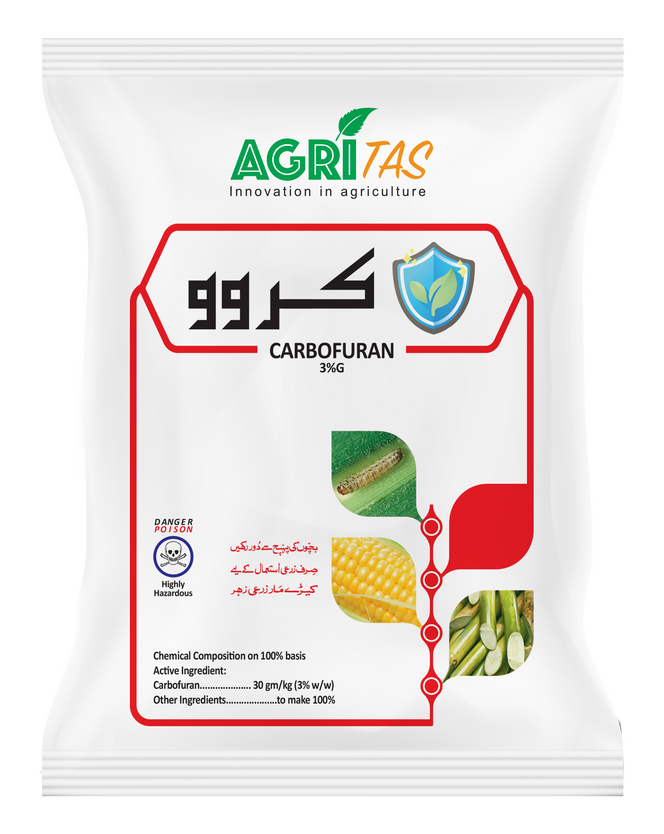
Pesticide
Croow™
Carbofuran 3% G
Price on call

Field library
Root-knot Nematodes (روٹ ناٹ نیمیٹوڈ)
Root-knot nematodes are soil-borne pests that attack plant roots, forming galls or knots that disrupt the plant’s ability to absorb nutrients and water. This results in stunted growth, reduced yields, and poor crop quality. These nematodes are particularly harmful in warm, sandy soils.
Affected Crops:
Damage:
1. Galling on Roots: Root-knot nematodes cause knots or galls on the roots, severely impairing the plant’s root system.
2. Weakened Plants: Plants show symptoms like yellowing leaves, wilting, and stunted growth.
3. Reduced Yield: Infested plants produce significantly lower yields, and the quality of produce is diminished.
4. Water Stress: Damaged roots cannot absorb enough water, causing plants to wilt, especially in hot conditions.
Control Methods:
Agritas offers several products for controlling root-knot nematodes:
1. Meileur
• A highly effective product designed to control nematodes by protecting the root system and reducing nematode populations.
• Application: Apply to the soil around the roots of affected plants according to the label instructions to ensure thorough treatment.
2. Morwet Duo
• Improves the coverage and effectiveness of nematicides by helping the product penetrate the soil to reach nematodes.
• Application: Mix with nematicide and apply to the root zone of crops.
3. Worm Gen
• A specialized formula that breaks the life cycle of root-knot nematodes, helping to eliminate them from the soil.
• Application: Apply directly to the soil or mix with irrigation water for effective nematode control.
Additional Tips:
Control
Pesticide
Carbofuran 3% G
Price on call
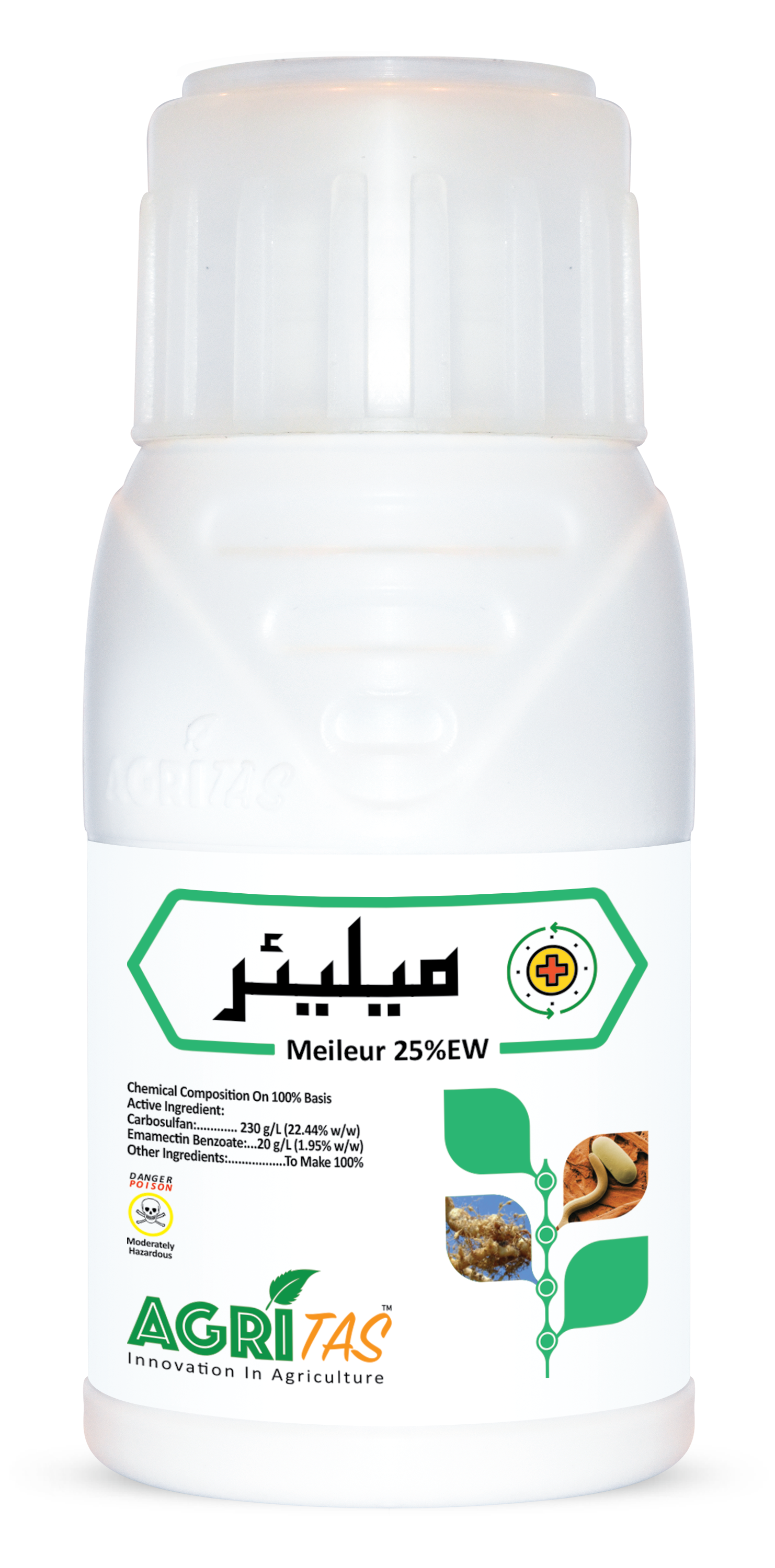
Pesticide
carbosulfan 22.44% w/w + Emamectin Benzoate 1.95% w/w
Price on call

Granules
Phorate + Carbofuran
Price on call
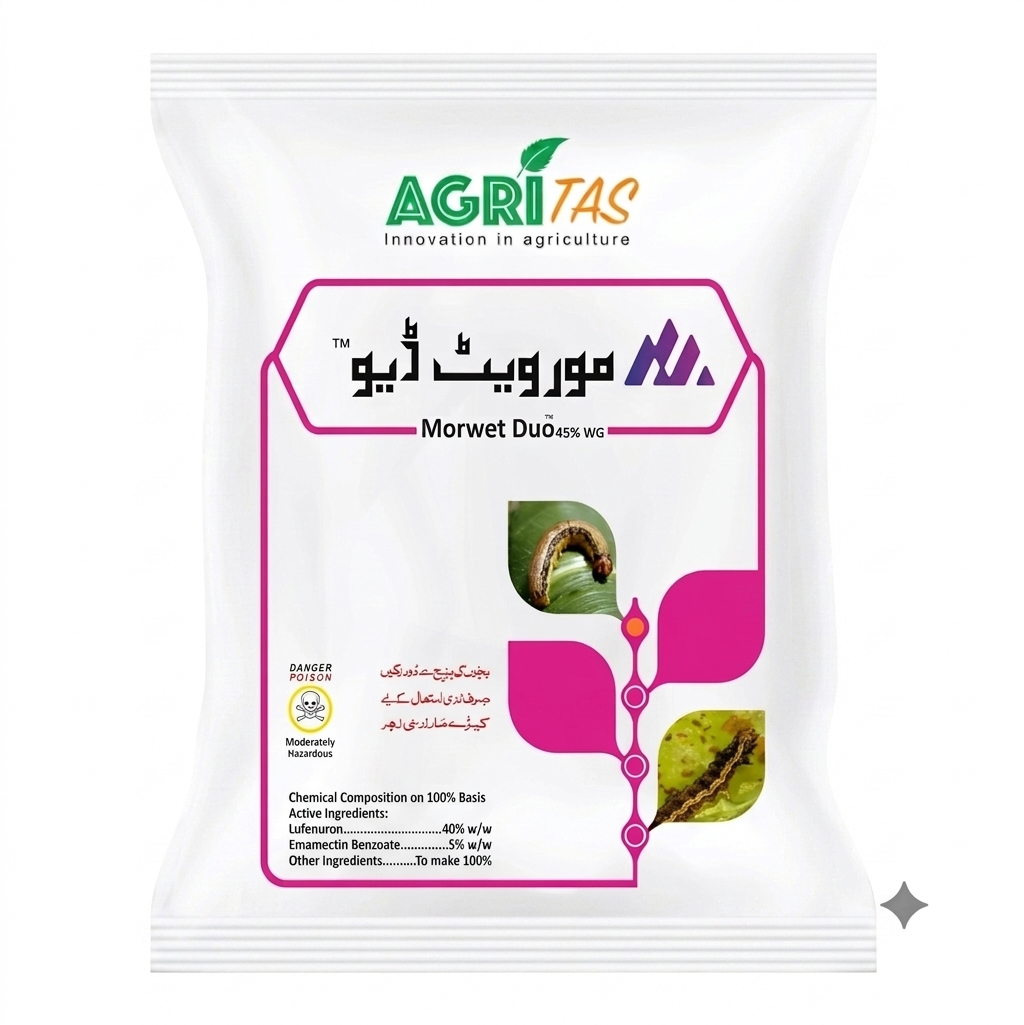
Pesticide
Lufenuron + Emamectin Benzoate 45% WG
Rs 878 / 30 gm
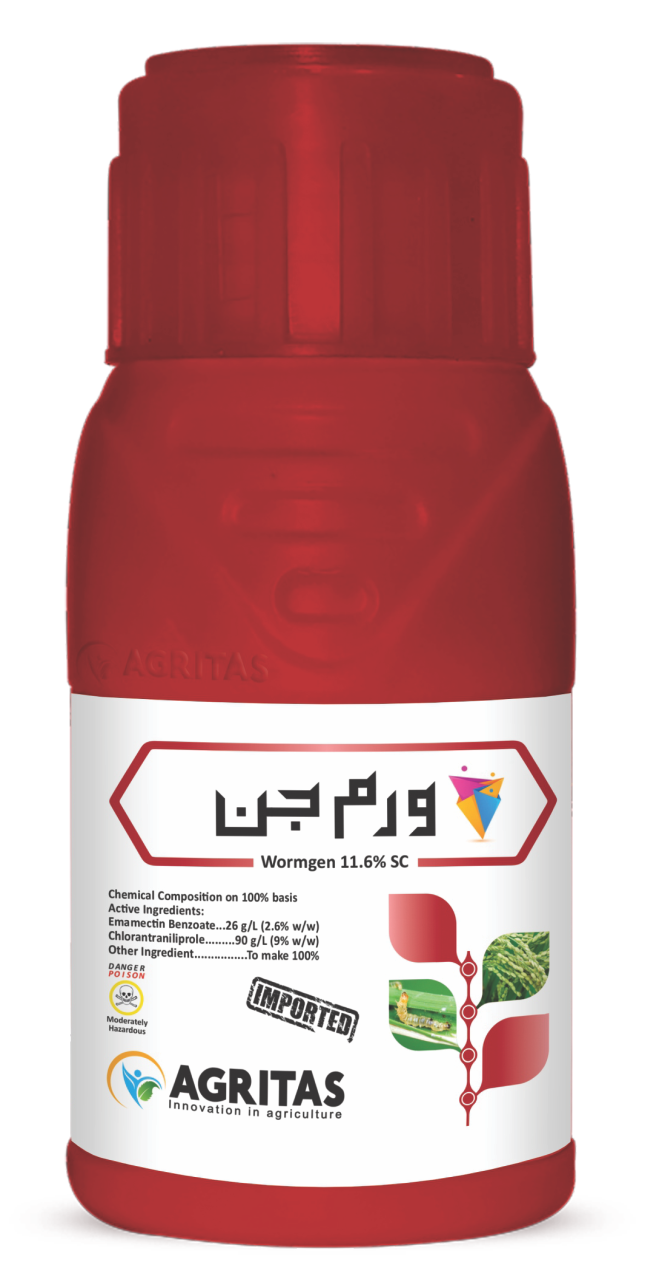
Pesticide
Emamectin Benzoate 2.6% + Chlorantraniliprole 9%
Rs 1,280 / 100 ml

ZARAAT · powered by Agritas
Crop guides, pest diagnosis, weather, mandi rates and ordering — in Urdu and English.