


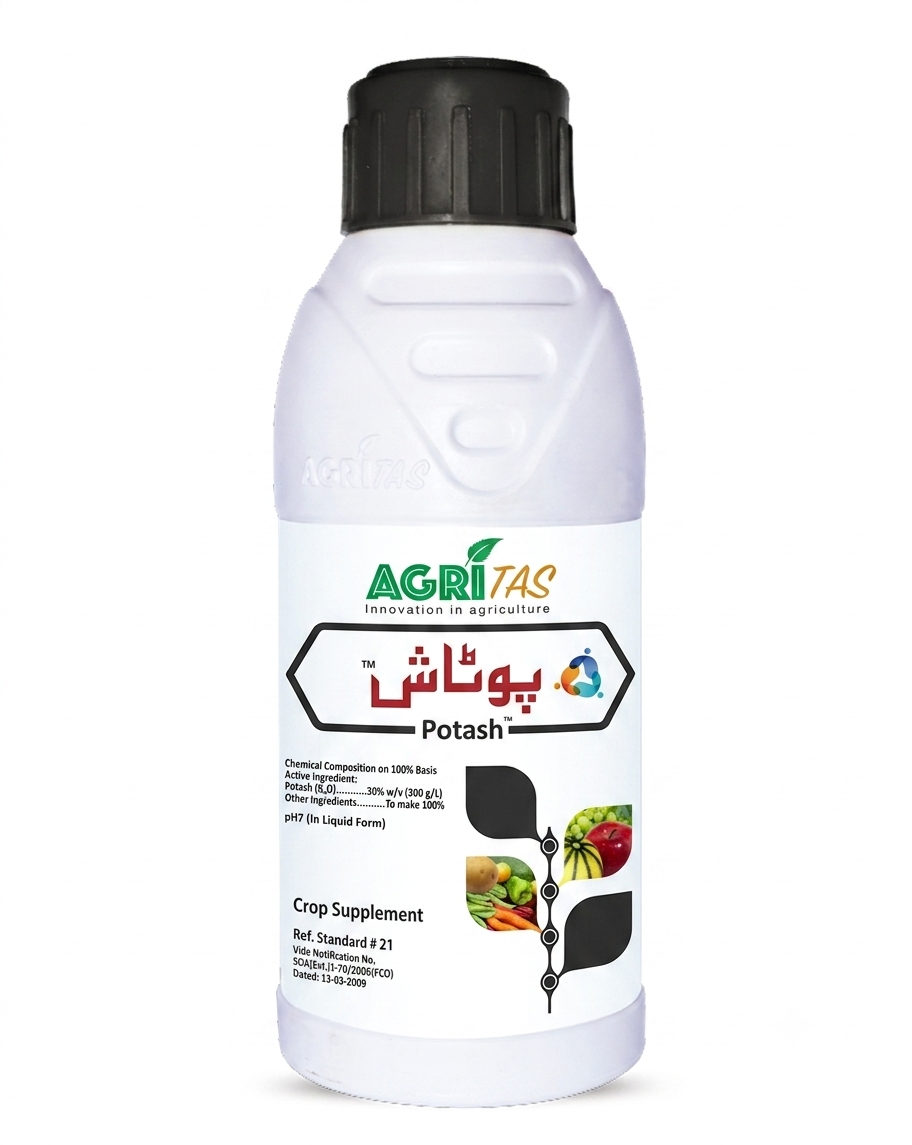
Micro Nutrients
Potash
Potash, PH7( In liquid Form)

Crop guide
1. Land Preparation Deep ploughing and pits 2 x 2 x 2 ft with farmyard manure. Rows 8–10 ft apart, vines 6–8 ft in the row. Erect the trellis BEFORE planting — putting posts in afterwards damages the young roots. 2.
Deep ploughing and pits 2 x 2 x 2 ft with farmyard manure. Rows 8–10 ft apart, vines 6–8 ft in the row. Erect the trellis BEFORE planting — putting posts in afterwards damages the young roots.
Plant rooted cuttings in January–February while dormant. Grapes need a dry ripening period, which is why Chitral and the Quetta uplands grow them well and the humid plain does not.
Rooted cuttings from a certified nursery, ideally on phylloxera-resistant rootstock.
Per vine per year: 15–20 kg farmyard manure in winter, 500 g urea, 400 g DAP, 400 g SOP. Potash decides the sugar in the berry — do not skip the SOP.
Every 10–15 days from bud burst. STOP watering as the berries begin to soften and colour — irrigating a ripening bunch splits the berries and invites rot, and this is the commonest way a good grape crop is lost in the last three weeks.
Weed Damage Control Product
Bermuda Grass (Khabbal) Mats the vine row and drinks the irrigation water before it reaches the vine's roots. Keep the vine row clean and hoe the runners out
Camel Thorn (Jawansa) Its root goes deeper than the vine's and keeps pulling water through the dry weeks when the bunches are filling. Cut every shoot back as soon as it shows, in the vine row as well as the alley — keep the spade out of the row; digging cuts the vine's own roots and every broken root piece sends up a fresh shoot
Field Bindweed (Lehli) Climbs the trunk onto the trellis and winds through the canes, shading the bunches. Pull it off the wire and hoe the roots in the row
Purslane (Kulfa) Spreads over the cleaned vine row after every summer watering and takes the surface water while the bunches are filling. Hoe it out of the row and throw it off the field — left lying, it roots again
Lambsquarters (Bathu) Fills the vine row over winter and takes the moisture the vine needs at bud break. Hoe the row clean before bud break
Keep the vine row clean; the alley can be grassed and mowed.
Mealybug hides under the bark and in the bunch. Thrips scar the young berries so they grow up russeted. Birds and wasps take ripening fruit — bagging the bunches solves both.
Powdery mildew is the main disease of dry areas — grey dusty patches on leaves and berries that then crack. Downy mildew appears as oily patches with white growth underneath in wet spells. Anthracnose pits the shoots.
Winter pruning is the whole crop. Grapes fruit only on shoots arising from last season's canes, so leave the right number of buds and remove everything else — an unpruned vine becomes a mass of wood with a handful of poor bunches. Remove leaves around the bunch at colouring for air and light.
Grapes do not ripen after cutting — taste before you pick. Cut whole bunches with secateurs in the cool morning, trim out damaged berries in the field, and pack in single layers.
150–250 maund per acre from an established trellised vineyard.
Recommended

ZARAAT · powered by Agritas
Crop guides, pest diagnosis, weather, mandi rates and ordering — in Urdu and English.