
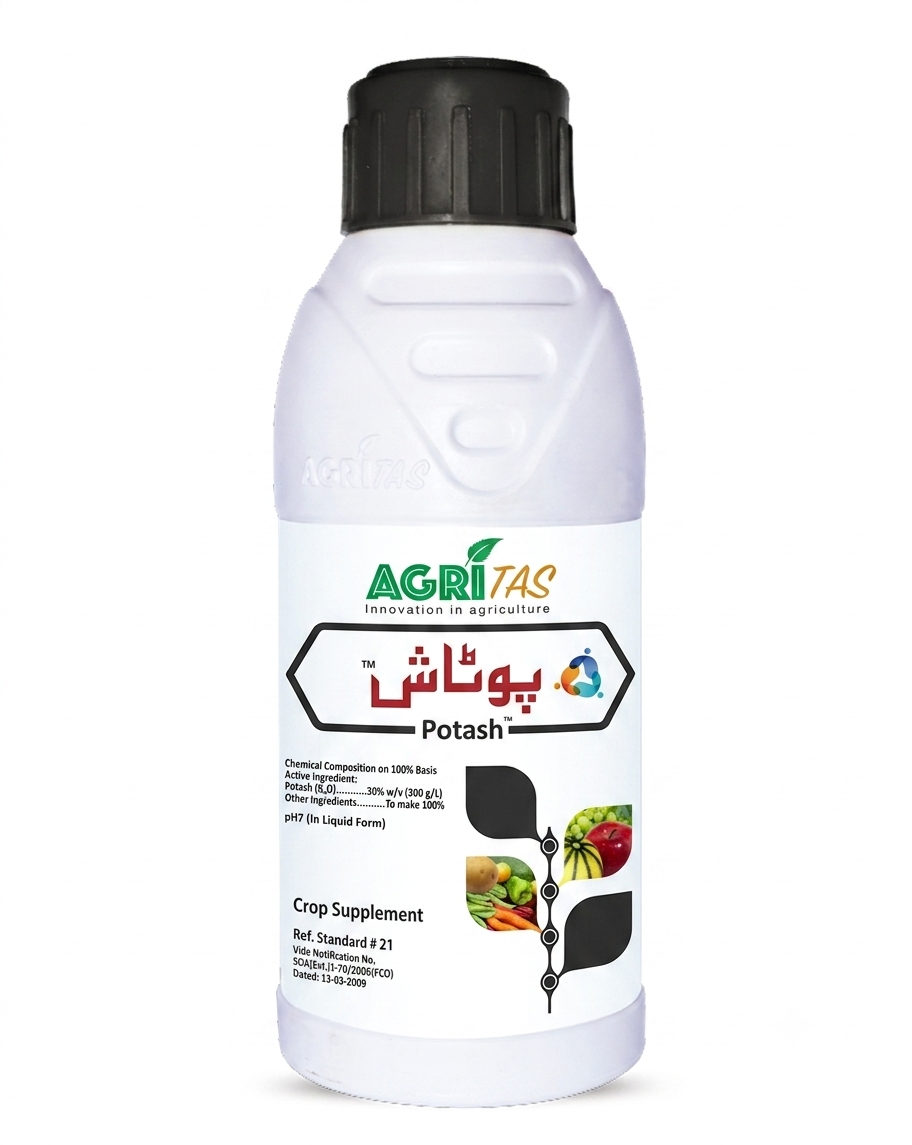
Micro Nutrients
Potash
Potash, PH7( In liquid Form)

Crop guide
Maize Crop Program (Updated) 1. Soil Preparation Deep plough the field 2–3 times to make a fine seedbed. Apply well-rotted Farm Yard Manure (FYM): 3–4 tons per acre. Ensure the soil is well-drained and fertile, with pH 6.0–7.5. 2.
Deep plough 2–3 times to 8–10 inches, then plank to a fine, level seedbed. Maize seed is large and pushes through a rough seedbed better than most crops, but the roots will not — a plough pan at six inches gives a shallow-rooted crop that lodges in the first storm.
Apply well-rotted farmyard manure at 3–4 tons per acre and work it in a fortnight before sowing. Fresh manure brings termite and weed seed with it.
Maize wants deep, well-drained loam at pH 6.0–7.5. It is more sensitive to standing water than almost any other kharif crop — twelve hours of waterlogging at the knee-high stage yellows the crop and costs yield that no fertiliser recovers. On heavy land, sow on ridges rather than flat.
Laser levelling pays for itself in maize faster than in wheat, because uneven land means half the field is drowning while the other half is dry.
Spring crop: February–March. Autumn crop: July–August.
In Khyber Pakhtunkhwa the September sowing is best done under low tunnel for reliable germination.
Sow on the side of a ridge, 2 inches deep, into moisture. Maize will not germinate evenly in a dry seedbed, and a gappy stand cannot be repaired later — the plants that did come up will not grow bigger to compensate the way wheat tillers do. Every gap is yield you have already lost.
Sowing date matters more in maize than in most crops. Spring maize sown after mid-March runs its grain filling into May heat, and pollen dies above about 35°C — the cob sets rows of empty grain at the tip. Autumn maize sown after August risks the reverse: cold at grain filling.
Aim for 28,000–30,000 plants per acre for hybrids. Fewer plants is the single commonest reason a Pakistani maize field yields well below its potential.
Type Seed Rate Row Spacing Plant Spacing
Hybrid Maize 8–10 kg/acre 2.5 ft 9–12 inches
Buy fresh certified hybrid seed every season. Maize is a hybrid crop — seed saved from your own hybrid cob loses much of its vigour in the next generation, and the field comes up uneven in height and maturity. This is the one crop where saving seed reliably costs more than the seed would have.
Insect protection: Dpest ws @ 5 gm /kg seed (controls early pest attack & Seed vigor improvement).
Treat in a clean drum or on a sheet, not on bare soil, and turn the seed until every grain is coated. Dry it in the shade before sowing — wet treated seed cakes in the drill and sows in clumps.
Seed treatment is the cheapest insurance in the whole maize programme. Termite and shoot fly do their damage in the first three weeks, underground, where you cannot see it and a spray cannot reach it. By the time gaps appear in the rows the crop cannot be saved.
Fertilizer Quantity Time of Application
DAP 1.5 bags (75 kg) At sowing
Urea 2 bags (100 kg) Half at knee height, half at tasseling
SOP (Potash) 1 bag (50 kg) Before tasseling
Zinc Sulphate 10 kg At sowing
Maize is the hungriest crop most farms grow, and it is hungriest for nitrogen exactly at knee height, when it is growing fastest. A urea dose that arrives late is money spent on a crop that has already decided how big its cob will be.
Never broadcast urea onto a dry field. Apply it into moisture, or with the irrigation, or up to half of it goes to the air as ammonia within days.
Zinc deficiency is very common in Pakistani maize on levelled and calcareous land. It shows as broad pale bands either side of the midrib on the younger leaves, with the leaf edges staying green, and it stunts the plant permanently. The 10 kg at sowing prevents it; once the banding shows, a foliar spray limits the loss but does not undo it.
Stage Frequency
After Sowing Light irrigation immediately
Vegetative Stage Every 10–12 days
Flowering & Cob Formation Every 7 days (critical)
Maturity Reduce irrigation
If you can only guarantee water at one moment in the season, guarantee it at tasseling and silking. Maize pollinates over about a week, and a crop short of water in that week sheds pollen before the silks are ready. The cob then fills in patches, with bare gaps between the grains — the classic sign of drought at flowering, and nothing afterwards corrects it.
Water in the cool of the morning or evening. Irrigating at midday in June heat shocks a crop that is already struggling.
Drain standing water within a few hours. Maize tolerates drought better than it tolerates a flooded field.
Weed Damage Control Product
Horse Purslane (Itsit) Carpets the open ground between the wide rows in the first month and takes the water and nitrogen the young crop needs. Tovate™
Johnson Grass (Baru) Comes back from rhizomes every year, grows above the crop and shades the cobs as they fill. Summer-plough before sowing so the rhizomes come up and dry on the surface
Jungle Rice (Swanki) Comes up with the maize in the moist seedbed and takes the early water and nitrogen before the crop covers the ground. FadeJet™
Tandla (Pigweed) Runs up fast in the warm weather and shades the young maize through the weeks the cob is being set. Tovate™
Purple Nutsedge (Deela) Pushes up through the row all season from tubers and shares the crop's water and nitrogen. Repeated hoeing with earthing up, the first at 25–30 days after sowing and again every 2–3 weeks; each pass starves the tubers a little more, one pass only suppresses it, it does not finish it
Pre-emergence: FadeJet™ @ 400 ml/acre within 2–3 days of sowing.
Post-emergence: Tovate™ @ 400 ml/acre when weeds are 3–4 inches tall.
The first 30–40 days decide it. Maize is wide-spaced and slow to cover the ground, so weeds get light and water that the crop should have had, and a field left weedy through that window loses more yield than most pest attacks take.
Spray pre-emergence onto a moist, settled seedbed. On dry soil the chemical sits on the surface and does nothing.
Important if wheat follows: Tovate™ and Gengwei 55%SC contain atrazine, which persists in the soil. Follow the label interval before sowing a sensitive following crop, and do not use them on a field going into wheat soon after. Where the rotation is tight, an atrazine-free option is the safer choice.
One hoeing at 25–30 days after sowing, alongside the earthing up, controls the annual weeds that escape and braces the plants against lodging at the same time.
Pest Damage Control Product
Shoot Borer Bores into shoots and cobs Wriar
Stem Borer Holes in stem, stunted growth Cygny
Armyworm Feeds on leaves Veento
Aphids / Jassids Sap sucking, leaf curling Dpest
Fall Armyworm Leaf shredding, cob damage Meliur
Fall Armyworm is the pest that has changed maize growing in Pakistan, and it is the one most often sprayed wrongly. The caterpillar lives deep in the whorl, under its own moist frass, where a spray aimed at the leaves never reaches it. Direct the spray into the whorl, use enough water to carry it down, and spray in the evening when the caterpillar comes out to feed. A daytime spray over the top of the crop mostly wets the leaves and wastes the chemical.
Walk the field weekly from two weeks after emergence and look into the whorls, not just at the leaves. Ragged windowed leaves and wet sawdust-like frass in the whorl mean it is already there.
Rotate between different chemical groups. Fall Armyworm develops resistance quickly, and spraying the same product every time is how a farm reaches the point where nothing works.
Stem borer damage shows as a dead central shoot that pulls out easily. Once the caterpillar is inside the stem no spray reaches it, so the timing is at egg hatch, not when the damage is visible.
Disease Symptoms Control Product
Downy Mildew Yellow streaks on leaves Contra
Leaf Blight Brown leaf spots Dimize
Rust Orange pustules on leaves Raison
Fusarium Ear Rot Discolored, infected cobs Rhume
Most maize disease in Pakistan is manageable by prevention rather than spray. Treated seed, a rotation that does not put maize after maize, and burying or removing last season's stubble take out the largest part of the pressure — the fungi that cause leaf blight and ear rot survive the winter in crop residue lying in the field.
Leaf blight matters most when it reaches the leaf above the cob before grain filling finishes. Damage low down on the plant late in the season costs little.
Fusarium ear rot is the one to take seriously beyond yield. Mouldy, discoloured grain can carry mycotoxins that are dangerous in animal feed, particularly for poultry. Do not mix visibly mouldy cobs into feed grain, and dry the crop down properly — the mould grows in storage, not only in the field.
Crop ready 90–110 days after sowing (depends on variety).
Harvest when cobs turn brown and grains are hard.
Dry cobs under sunlight for 3–4 days before shelling.
The reliable check is the black layer: peel back the husk and look at where a grain joins the cob. A small dark spot there means the grain has stopped filling and is at maximum weight. Harvesting before that costs yield; leaving the crop standing much after it invites lodging, rats and birds.
Shell down to about 13–14% moisture before storing. Grain stored damp heats, moulds and can develop the toxins described above — most maize lost in Pakistan is lost in the store, not in the field.
Store in clean, dry bags on a raised platform away from the wall, and keep the old grain separate from the new. Mixing last season's stock into this season's is how a weevil infestation carries over.
 Jessidmedium
 Aphidsmedium
 Fall Armywormhigh
 Stem Borerhigh
 Termitehigh
 Cutwormmedium
 Shoot Borerhigh
 Armywormhigh
 Field Bindweed (Lehli)medium
 Purple Nutsedge (Deela)high
 Horse Purslane (Itsit)medium
 Yellow Rusthigh
 Brown Rustmedium
 Bacterial Leaf Blighthigh
 Sheath Blightmedium
 Powdery Mildewmedium
 Downy Mildewmedium
 Leaf Blightmedium
 Rustmedium
 Fusarium Ear Rotmedium
 Zinc Deficiency (Khaira)medium
 Nitrogen Deficiencymedium
 Iron Chlorosismedium
 Salinity and Sodicityhigh
Phosphorus Deficiencymedium
Potassium Deficiencymedium
Micronutrient Deficiencymedium
Salinity and Sodicityhigh
Phosphorus Deficiencymedium
Potassium Deficiencymedium
Micronutrient Deficiencymedium
Recommended
Micro Nutrients
Potash, PH7( In liquid Form)
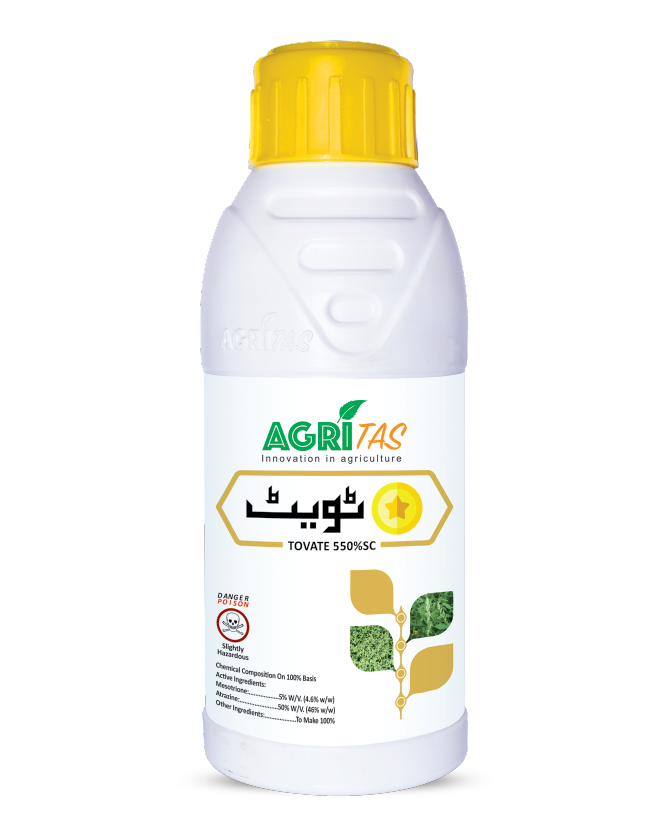
Herbicide
Mesotrione 5% W/V + Atrazine 50% W/V SC
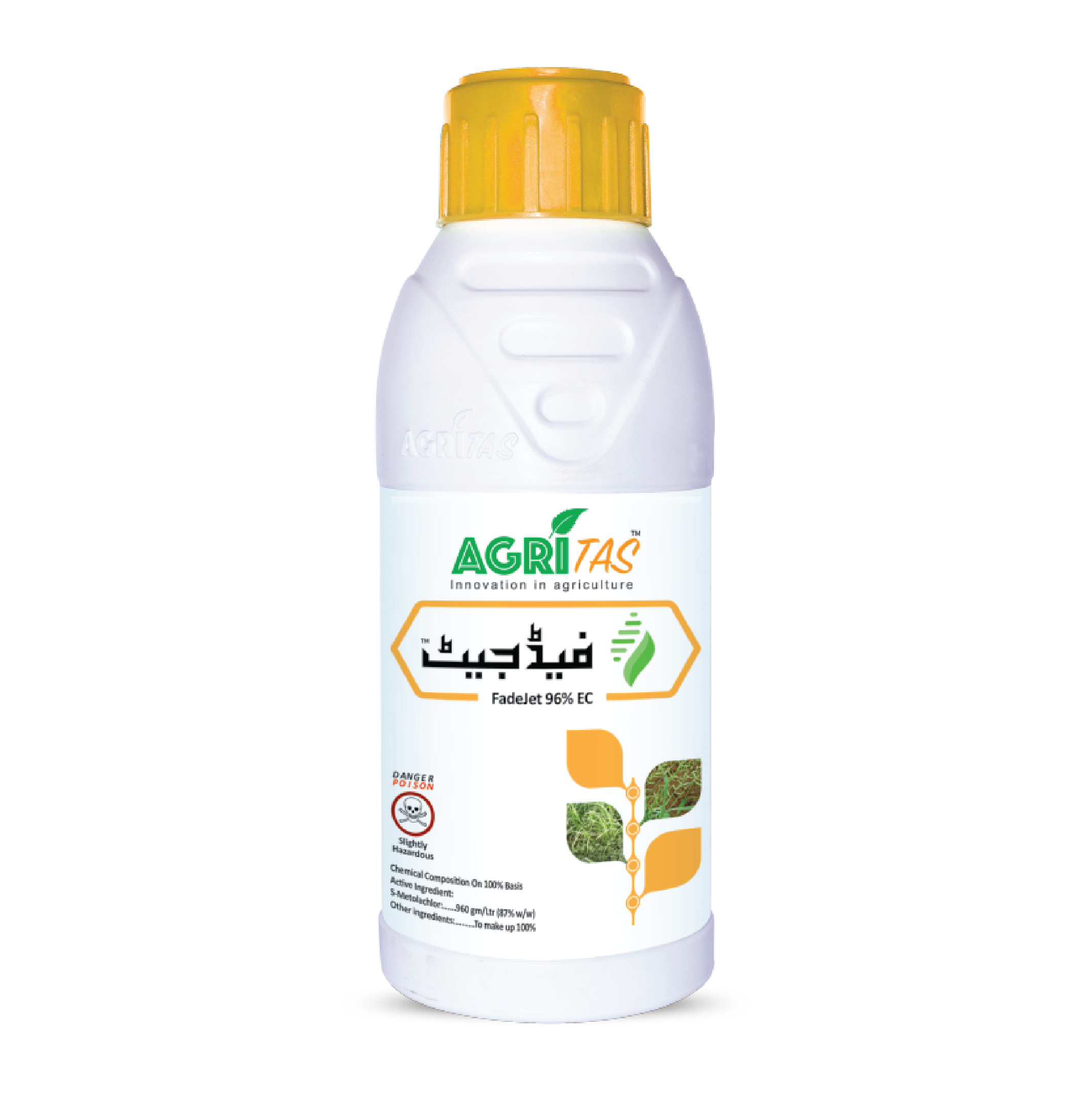
Herbicide
S-metolachlor 96% EC
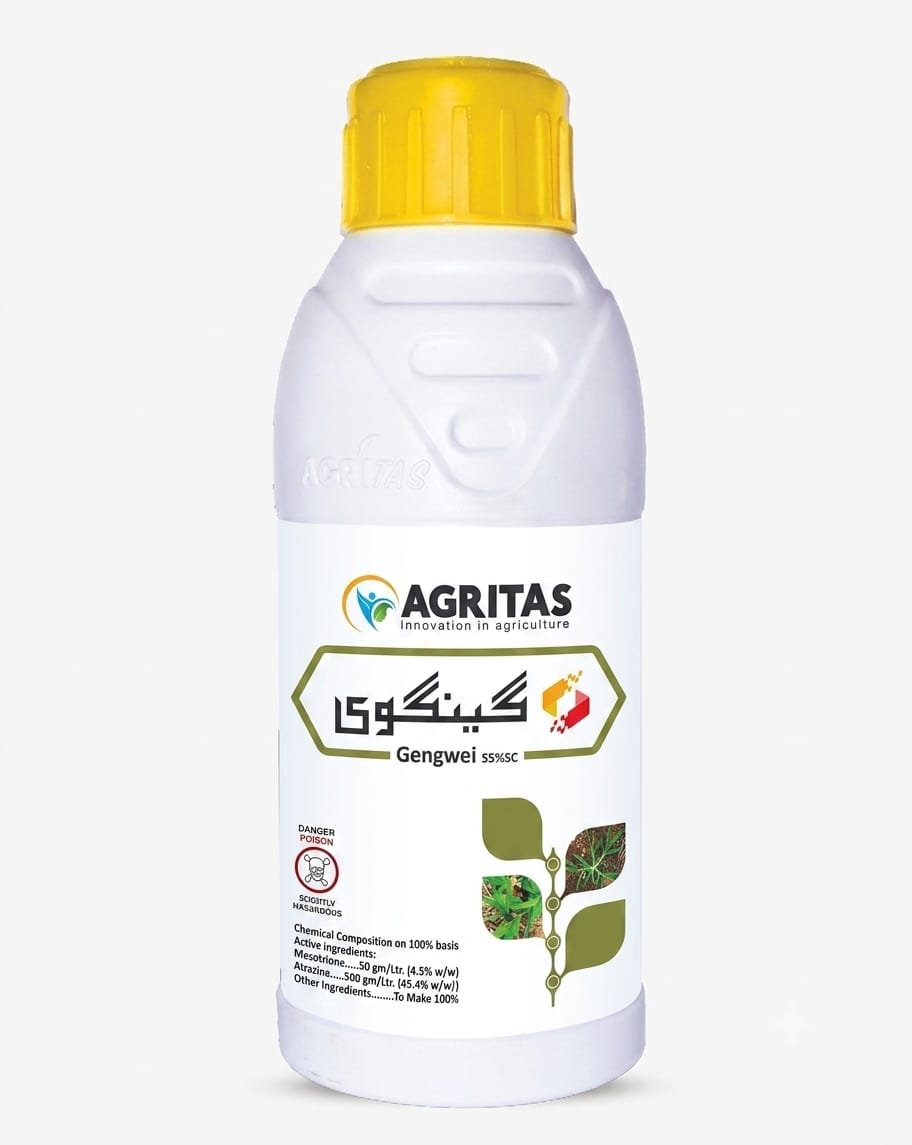
Herbicide
Mesotrione+Atrazine
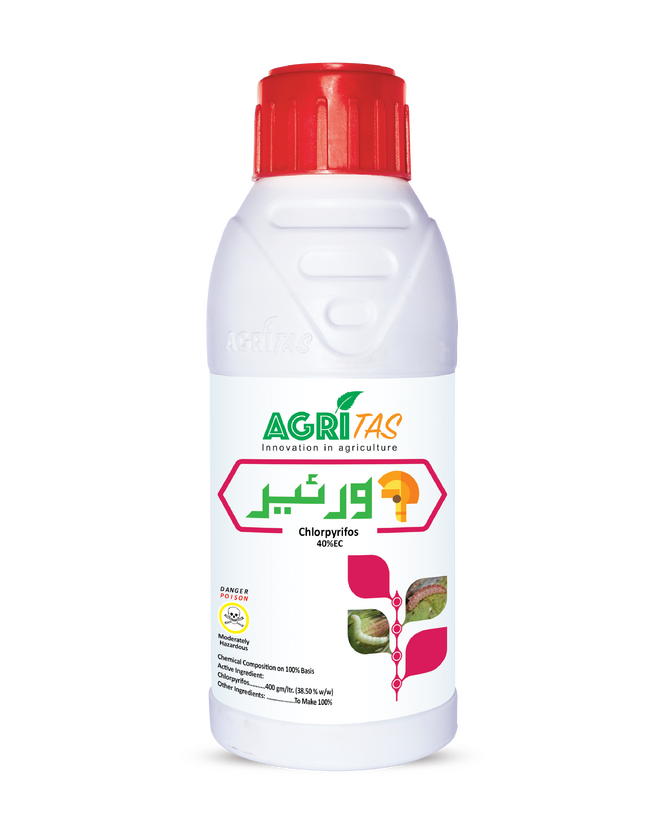
Pesticide
Chlorpyrifos 40%EC
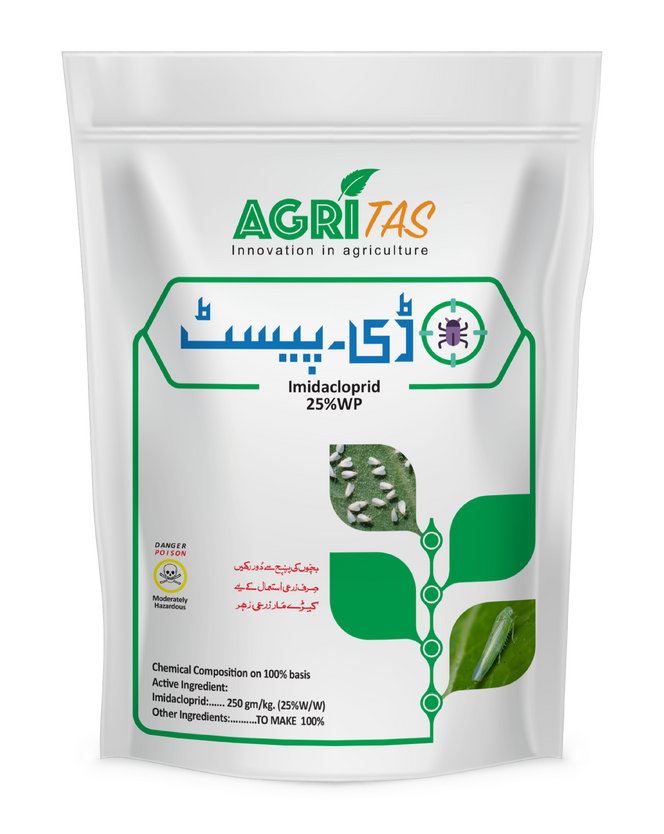
Pesticide
Imidacloprid 25% WP
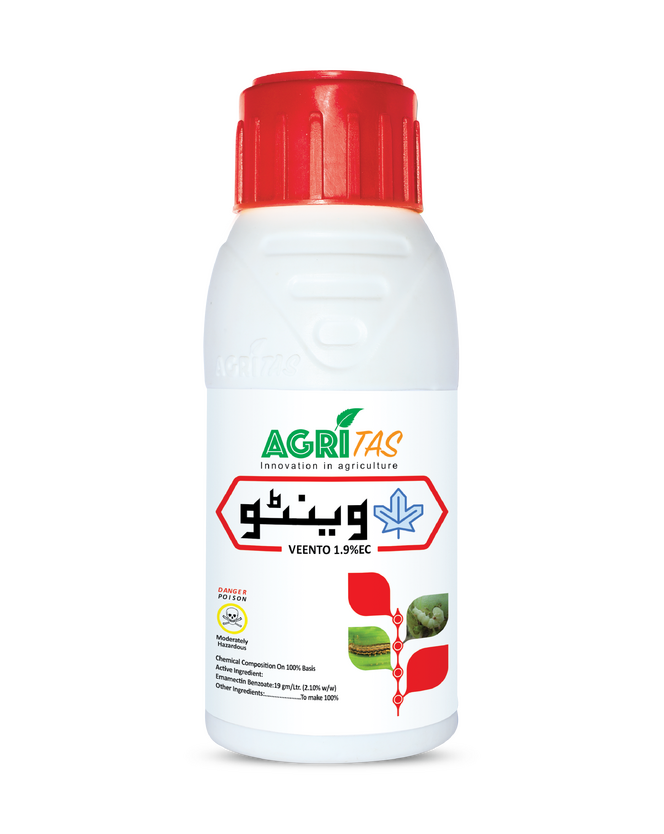
Pesticide
Emmamectin benzoate 1.9%EC
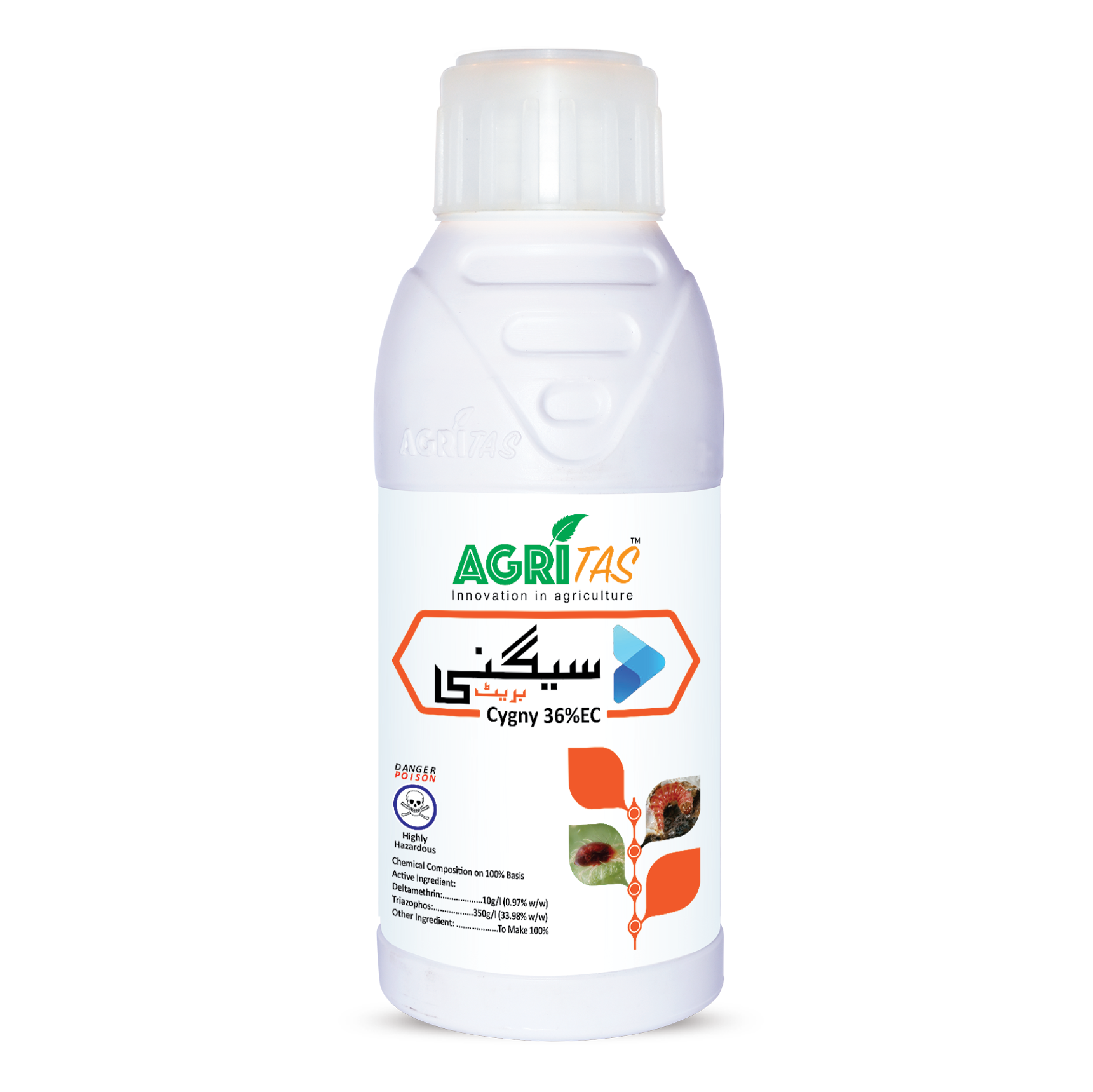
Pesticide
Deltamethrin + Triosophos
Rs 2,155 / 500 ml

ZARAAT · powered by Agritas
Crop guides, pest diagnosis, weather, mandi rates and ordering — in Urdu and English.